Saturday, October 31, 2015

This Day In History...The Convict Lease

On October 31, most of us annually don masks and descend upon the neighborhoods of our city or town, seeking the answer to one question: trick or treat?  In eastern Tennessee in 1891 however, miners donned masks for a much more serious and worthy cause, freeing prisoners being forcibly used as free labor, and giving them the chance at a new life.  In today’s version of “This Date in History” I’ll remind you of events that touch on issues at the forefront of political battle today, such as unions, racism, and the free market.  I’ll also talk about how October 31, 1891 was a turning point in what became known as “The Coal Creek War”.

The "Convict lease" system was nothing short of legalized
slavery, and lasted for about 30 years after the Civil War.
“The Convict Lease” was an agreement originally worked out in Tennessee, which quickly spread across the south in the years following the Civil War.  With hundreds of thousands of freed slaves-many released with no more property than the clothes on their back-roaming the south, petty crime had spiked, and without the use of those slaves, production had declined.  The southern economy hadn’t yet figured out how to work without the use of forced labor, and in an effort to both rebuild the south and continue to grow, they turned to an old reliable tactic of production: forced labor.

“Convict leasing” really began for the first time seriously in eastern Tennessee, when Thomas O’Conner, a professional card player with a very deep wallet and some serious political connections negotiated (and by “negotiated” I mean bribed) the Tennessee legislation into a 5 year lease of what amounted to the state’s entire prison system for the price of $150,000.  By 1871, O’Conner had worked out an agreement with the Tennessee Coal Mining Company as the primary lessee of state prisoners for use as coal miners, and then additionally as railroad laborers.

Opponents to the system pointed out it’s similarity to slavery, with the judge and courts acting as traders, while wardens played the part of owners.  The program also used local police to feed them prisoners, as working conditions were hard, leading to a very high turnover rate-as high as 50% in some areas-due to death from incidents involving explosions (dynamite), landslides, cave collapses, and flooding.  Local police were happy to oblige, picking up sweeps for drunks and vagrants when the need for labor was high, who would then be sentenced to anywhere from 60 to 90 days of hard labor-if they managed to survive.

American historian David Oshinsky writes:
“Railroad fever was sweeping the state, and unskilled labor was in short supply.  After little debate and much bribery, the legislators turned over the entire prison system to a professional card gambler named Thomas O’Conner for $150,000 on a 5 year lease.  By 1871, state convicts were laying track and mining coal from Memphis to Knoxville.  Each morning their urine was collected and sold to local tanneries by the barrel.  When they died, their unclaimed bodies were purchased by the Medical School at Nashville for the students to practice on.”

Forced labor from convicts helped ease the pain of the Civil
War on the south's farming system, and was responsible
for a good deal of construction on the country's new railroad.
He goes on to talk about the flexibility of local laws, according to the company’s labor needs:
“The numbers ebbed and flowed according to the labor needs of the coal companies and the revenue needs of the counties and the state.  When times were tight, local police would sweep the street for vagrants, drunks, and thieves.  Hundreds of blacks would be arrested, put on trial, found guilty, sentenced to 60 to 90 days, plus court costs, and then delivered to a “hard labor agent”, who leased them to the mines.  In an average year, 97% of Alabama’s county convicts had “colored” written next to their names.”

Mine owners found convict laborers were not very cooperative, often sabotaging their own work, or the mines in an effort to get time off due to broken equipment, or poor quality of work and thus a decreased demand for their product. To combat this problem, many coal companies mixed in free laborers as well, hoping that with enough men whose jobs could be lost and who wanted to be there, they’d be able to better combat the issues with quality and sabotage.  Unfortunately, adding these free laborers into an abusive work environment introduced the ability to organize-or at least attempt to.

Throughout the 1880’s, free laborers organized to protest such issues as company checkweight men, who routinely underweighed their production to save money, payment in legal tender vs. “scrip” (basically a company credit, perhaps to the company store), and the Convict lease, which robbed free workers of any leverage negotiating fair wages, or the ability to strike, since they could be replaced by workers at ⅙ of the cost of a free laborer.

By the early 1890’s the struggle between workers and ownership in the coal mines and railroads of eastern Tennessee was flirting with real violence, having gone from protesting and lobbying to fire setting.  The workers’ frustrations mounted, and on July 5, 1891 the TCMC locked them out, replacing them with convict laborers; the straw that broke the already fragile peace between the workers and company.  Nine days later, on the 14th of July workers and their allies would raid the convict stockade in Briceville, breaking their fellow convicts out.  The convicts would quickly be returned, only to be released in another raid 6 days later, on the 20th.

Over the next few months, miners would attack the stockades in Briceville and Coal Creek, and Governor Buchanan would convene with legislators to discuss the convict lease, partly due to the rebellion, but also in part due to the company being 11 months behind on “rent” of the convicts.  On October 31, 1891 however, things took a real turn as the miners’ rebellion made a significant change to their strategy: they started actually freeing their comrades.

On the night of October 31, three days after mining leaders had resigned and issued statements officially endorsing and encouraging pacifism in the resolution of their problems, they donned masks and lead 1,000 armed workers in a charge on Briceville’s stockade and mine. After overcoming and disarming the militia stationed there, the miners freed their comrades, supplying them with clean clothes, and putting them on the train to Knoxville, effectively freeing them from the convict lease.  

Some prisoners remained behind and moved on with their liberators to Coal Creek, where they freed still more prisoners in the same fashion, resulting in 300 freed prisoners that night.  Over the next year the miners would continue with this strategy, freeing most of the forced laborers throughout the summer of 1892.  A few more attacks would follow as negotiations carried on, ultimately ending for good when Tennessee became the first state to abolish the convict lease, under the leadership of former pro-lease judge and sitting Governor at the time, Governor Peter Turney.

Looking back, it’s hard not to see the cycle created by greed, both through the government accepting bribes and a company purely seeking profit and let loose on the free market, completely unhindered by regulation.  First, society released these slaves with nothing, then when they had to steal to eat, or couldn’t find housing, would be locked up as vagrants and thieves, sentenced to months of hard labor which they weren’t likely to survive.  Stuck in this cycle, there didn’t appear to be much hope, and for 25 years this policy dominated most of the southern states, as they were reconstructed on the blood, sweat, and tears of the unpaid black worker in much the same way they’d originally been built in the first place.  Today, locals claim that on a quiet night, you can hear the screams of the miners who died in one of the greatest disasters of that time; the Fraterville mining disaster, which killed 184 of 187 men living in the area.  But that is a story for another day in history.

On this day in history, October 31, coal miners in eastern Tennessee struck a critical blow in a bloody war that began as a labor movement, and ended in the liberation of thousands of forced laborers.  This generation of Tennesseans were surrounded by war veterans; their fathers had fought in the Civil War, their sons would fight in World War 1, and their grandsons in World War 2.  This generation fought an important battle as well however, ensuring fair treatment for miners, railroad workers, and laborers all across the South, as the economy and country healed from the Civil War.

Labor unions have certainly grown, and evolved into colossal organizations that often forget their roots.  The dream of a “free market” dominates certain political airwaves, and most seem to have forgotten the origin of labor unions, and the difficult times that existed prior to some of the regulations that were instituted for a reason, in some cases, what seems like a very long time ago.

Friday, October 30, 2015

This Day in History: Battle of the Iron Bridge (Oct 30)

October 30, 637 CE, the Battle of the Iron Bridge, at Antioch in Roman Syria came to an end.  This was a battle waged between Muslims (The Rashiduns) and the Byzantine army-or the Eastern Roman army-the primary military force of the Byzantine forces, and direct descendant of the Roman army.  The battle was fought near a 9 arch stone bridge by the River Orontes, about 12 miles from the city of Antioch itself, with the Byzantine forces defending the city, and the Muslim forces on the attack.  While details of the battle itself were not recorded, it is known that Khalid ibn al-Walid (a companion of the prophet Mohammed) lead the Muslim forces.  The Byzantine forces ultimately surrendered, making just one of hundreds of victories al-Walid would pile up on his resume before his dismissal from the military in the year 638.

With two forces totalling 40,000-50,000 soldiers between them, the battle claimed more than 10,000 lives, and waged on for days, maybe weeks, finally ending in a siege laid by the Muslim invaders against the city itself.  Following this decisive victory, al-Walid moved his forces south, where he continued his victorious march, claiming most of north-western Syria with little difficulty.  Ultimately, al-Walid would unify all of Arabia under one single political entity: the Caliphate.  By the end of his career, al-Walid had achieved hero-like status in his community, due primarily to his military prowess, and earned the nickname "Sword of God".  This was part of the reason for his dismissal, which seemed to be due in part to jealousy of a cousin of his; Umar.  He lived his final years out in Emesa, dying just about 4 years after being dismissed from the military.

Thursday, October 29, 2015

This Day In History...Black Tuesday

As our country finds itself trying to scratch and claw our way out of the worst financial crisis in many of our lifetimes, I often find it useful to look back at historical times of hardship, both at the mistakes that were made leading up to it, and the actions taken afterwards to resolve those issues.  On this day in history, we’ll look primarily at the start of the Great Depression, in particular a day known as “Black Tuesday”.


On Oct 29, 1929 the stock market crashed
and sent the country's economy into a tailspin
The 1920’s were known as the “Roaring Twenties” for two reasons: a rise in organized crime in reaction to Prohibition, and a raging economy, primarily throughout the first half of the decade.  That rage however, was built off of optimism, not real success.  Following the first World War, a feeling of patriotism and optimism swept through the country.  Investors caught the optimistic feeling, pouring money into the stock market as prices soared, with the Dow Jones reaching 350 On October 10, 1929 for the first time in it’s history.


The market couldn’t bear the strain, and began to buckle.  The first hiccup came on September 18, 1929, a day originally labeled “Black Thursday”.  On this day, the market took a sharp turn downward-however the relatively new Federal Reserve System was able to stall the crash in the immediate time frame, however by the end of the next month things had taken a turn for the worse.


On what would become the real “Black Thursday” (October 24, 1929) the market took a sharp turn downwards at the opening bell, dropping 11% to start the day off.  A group of banks put their collective financial weight and buying power behind a man named Richard Whitney, who attempted a tried and true method of stopping the crisis by staging large purchases of certain “blue chip” stocks.  This method had worked in 1893 and 1907 to help pull the country out of potential financial tailspin, and for a moment it seemed like it would work again, as by the end of the day the market had regained some ground, closing at the end of the day down only 6%.


The following week however, the market would finish tearing the heart out of the American financial system, dropping 13% on “Black Monday” (October 28, 1929) losing 38.33 points.  The following day on “Black Tuesday” the market finished it’s plummet, losing 30 more points to shed another 12%.  This on a day that the Dow Jones set a record that would stand for another 40 years; trading a total of 16 million shares amidst wide speculation that President Herbert Hoover would veto the pending Smoot-Hawley Tariff Act.


The Glass-Steagall Act eventually helped pull the
country out of it's financial tailspin.
The market would experience a brief one day recovery on the 30th, but over the next several weeks it would continue to crash, ultimately bottoming out around 198 points (from that previous high of 350).  Over the next two decades the market would continue to slide, and then slowly begin to build itself back up.  In fact it would be more than another 25 years-November 23, 1954-before the market would fully recover and hit that pre-crash high of 350 again, as economists tried to figure out the best way to regulate things and avoid sharp crashes like that of 1929 again.

Such regulatory measures as the Glass-Steagall Act grew out of the experiences of 1929, in much the same way regulatory measures such as Sarbanes-Oxley or the Dodd/Frank has grown out of the financial failures our country has experienced over the last decade or so.  The question history forces us to ask today is the same that it forced economists to ask in 1929 however; will the same policies that have worked in the past work this time?  Only time will tell...

Wednesday, October 28, 2015

This Day in History...The Volstead Act


Sometimes it truly amazes me to go back in time and read about struggles over the same issues we find dominating airwaves and internet space today.  In truth however, most political issues are never ending battles that span across many decades.  Today we see uprising with the “Tea Party” and “Occupy” movements lashing out against corporate favoritism, leading to the entire country attacking lobbying, as we collectively realize just how much it has shaped the legislature of our land.  In 1919, the true birth of lobbying as we know it today culminated in one of the biggest changes in legislature our country has ever seen-and also one of it’s biggest failures.  I write about today in history to remind us all of what happens when we let special interests write our laws.


“The Volstead Act” (aka “The Prohibition Act”) was an act written by Wayne Wheeler of the Anti-Saloon league, one of the most powerful lobbyists and men in politics at the time.  He’d been an employee of the Anti-Saloon league since graduating college, and had quickly risen through the ranks.  Wheeler all but invented pressure politics, otherwise known as “Wheelerisms” in today’s political world.  Under the leadership of Wheeler, the ASL focused solely on promoting prohibition, working feverishly to advance that agenda at all costs, while ignoring all other issues including party.

The act would be passed, and then vetoed by President Woodrow Wilson, however on this day in history-October 28, 1919-Congress overrode that veto, passing the Volstead Act into law as a reaction to the political pressure organizations such as the ASL, and smaller organizations like the Prohibition Party piled on them.  With a man who wielded the clout of Wheeler-a man who according to his former publicity secretary “controlled six Congresses, dictated to two Presidents of the United States” and “directed legislation in most of the states of the union” it was almost impossible to imagine the bill not passing.

The ASL pushed their agenda on every front they could, ranging from legislature and lobbying in congressional hearings to emotional appeals to anti-German feeling that still hung in the air throughout the country following the first World War.  They attacked at every level of legislation, from local to state to federal until finally a Constitutional Amendment was passed; the 18th Amendment barring the “manufacture, sale, and transport of intoxicating beverages”.  This left a few questions to be asked, not the least of which was: just what is an “intoxicating beverage”?  The Volstead Act was drafted to answer all the questions of just how the 18th amendment would be interpreted and enforced.  As the main lobbyists, supporters, and proponents of the amendment, Wheeler and his ASL co-workers were the right people to write the act.

The Volstead Act answered three main questions regarding the 18th Amendment;
1) What is an “intoxicating beverage”?
2) What will the penalties be for breaking the law?
3) Are there any exceptions to the amendment?

The first version of the bill identified anything over .5% alcohol percentage to be an intoxicating beverage, however it did allow citizens to make juice that was not intoxicating for themselves.  Very quickly, the .5 limit would be struck down however, (by the Bureau of Internal Revenue) leading to the effective legalization of homemade wine.

The act failed miserably when it came to punishment and enforcement of the 18th amendment.  While it did call for trials for all offenders, many-if not most-of those trials were unsuccessful.  In one sampling, of over 4,000 arrests there were merely 6 convictions.  One of the major problems was that the act failed to allocate enough resources, committing too few agents to enforce and oversee such large areas as to virtually guarantee their failure.  You see, proponents of the act and amendment never foresaw the negative affects, with some believing so staunchly that alcohol was essentially the root of all evil, that many towns even sold their jails on the eve of Prohibition, thinking they’d never need to use them again.


Lastly, the act outlined many exemptions, including the ability of doctors to actually prescribe alcohol to cure certain ailments.  What resulted was really a maze of exemptions, allowing almost anyone who wanted to bypass the new law to do so.  Between the unclear language outlining the implementation of the act, the poor planning regarding public backlash, and the ability of most to bypass the law if they wanted to, the act was more or less doomed to fail from the get-go.

The Volstead Act ultimately failed completely, when on December 5, 1933 Utah became the 31st state to ratify the 21st amendment, striking down the 18th and ruling the Volstead Act to be unconstitutional.  With Wheeler dead in 1927 within a year of his retirement and the namesake of the act; Andrew J. Volstead out of the House of Representatives in 1923 there were few willing to combat the rise of public pressure to repeal the 18th amendment, as the government finally decided to return the power of regulating alcohol to the states once and for all.

Wednesday, September 16, 2015

Book Review: The American Revolution: A History By: Gordon Wood

Growing up as school children here in the United States we spend a great deal of time learning about the American Revolution.  We hear about the Stamp Act, the Tea Party, “1 if by land, 2 if by sea”, the battles of Lexington and Concord, and the founders and their heroics.  What we do not get very much of however, is an unbiased look at the events surrounding and within the revolution itself.  They say history is written by the victor, and that victor often is more interested in telling “his story” than “history”.  Gordon Wood is one of a few rare historians able to almost completely cut through that, giving us an unbiased look at the real history of the American Revolution.


As perhaps the leading historian in the world on the time period, Wood is uniquely qualified to write a book like The American Revolution.  In it, he reviews not only the actual events leading up to the revolutionary war, but the attitudes, the general public feeling, and the real reasons behind not only many actions by the British, but perhaps the real reason for the war itself as well, which I believe had little to do with taxes.  Without completely eliminating any reason for you to read the book yourself, I’d love to share a few of these with you, so (spoiler alert!) here you are:


The Stamp Act and other Taxes


Growing up, we are all taught that a major motivating factor behind the revolution was taxes, specifically the colonists being taxed without representation.  This certainly WAS an issue, however I would argue that the implementation of these tax laws was the real problem.  British royalty certainly had legitimate reasons for needing to tax; with the costs of keeping up troop levels on the western border of the colonies to protect colonists from increasingly violent Indian attacks.  The crown had already been taxing British citizens beyond normal means, having to militarily enforce a cider tax in the apple growing counties of England at one point just to keep up with inflating costs as the population in the colonies kept growing and growing, pushing the borders farther and farther out, and resulting in more conflict with the natives.


These taxes certainly were decided without any colonial input, however they were justified.  When one wants to gain a benefit such as military protection from the natives of a land you’re slowly trying to conquer, they must pay for that benefit in some way.  As colonists began to revolt against the taxes being implemented, boycotting products and destroying others, the crown had to think outside the box and come up with new ways to cover the cost of housing their soldiers.  Which brings me to my next point...


The Quartering Act of 1765


As a kid in school, growing up here in America we learned that the British forced colonists to house their troops.  It was insinuated, if not taught outright that the purpose behind this was some kind of control during the revolution itself.  This could not be farther from the truth, the facts are as follows:
While colonies hadn’t had a problem contributing to the military effort of the British during the French and Indian War (in some places better known as the “Seven Years War”) during peacetime they were not as forthcoming with funds for the armies.  Despite that, as discussed before the armies were still necessary.  As such, the Quartering Act of 1765 was written, requiring colonies to put the soldiers up in public housing, inns, and the like in order to offset the costs of the military being stationed there against Indian attacks.
In 1765 the Revolution was not underway yet, but it was becoming clear that the colonies were outgrowing British rule, and the attitudes of the colonists were growing to match.  They did not like this quartering act, and refused to adhere to it, keeping troops on their ships in the harbors even, as opposed to finding them any kind of living quarters.  This lead to some adjustments in the Quartering Act of 1774, which was even less well received.  By 1774 the ship had pretty much sailed on the relationship between Great Britain and the colonies regardless of the quartering act.  This act seems to have been implemented with slightly more sinister intentions than the previous one, particularly as tensions grew and war grew more likely.


The Tea Party
Lastly, a major event in American history: The Boston Tea Party.  On December 16, 1773 the “Sons of Liberty” in Boston, Mass infamously boarded a British merchant ship in their harbor, and in action rebelling against the Tea Act, began throwing the tea into the harbor.  In reaction, Parliament passed a series of laws that later earned the label “the Coercive Acts”, in an effort to reestablish authority over the colonies.


Colonists were enraged at the Tea Act, it was viewed as a means by which to force the colonists to pay British taxes that were voted on without any colonial representation.  See, the Tea Act granted the East India Trading Company the exclusive rights to sell tea in the colonies.  While the colonists viewed it as a direct attack on them, the reality of the act is that Parliament wrote it into law for the sole purpose of saving the East India Company from bankruptcy.  Ironically one can surmise that the bankruptcy was probably at least in part due to the trade wars the colonists had been waging against the crown for the decade or so prior to the Tea Party itself.


The Real Reason for the War?


These are the kinds of stories that Wood tells us about the revolution and the times surrounding it, and people involved in it.  This teaches us how often things can be about perspective, about something simple as communication.  The American side talks about taxation without representation, but they were hardly the only large group of Englishmen not represented at all in Parliament.  At the time Parliament was a mess of tradition and history, with several of their largest cities not represented at all (such as Manchester and Birmingham-both budding cities at the time) while other towns continued to send representatives to the House of Commons despite the fact they no longer even existed (such as Dunwich, a community which had “long since slipped into the North Sea”).


I think that more than the actual act of taxing, it was the execution of the acts, the arrogance with which they were exercised that lead to the revolution.  Surely Americans would have seen the sense in boarding troops to protect them against Indian attacks, or paying taxes that would pay for those troops’ room and board at least.  However, instead of explaining THAT to them, the British government decided to focus primarily on explaining why they had the power to tax the colonies and the colonists didn’t have the right to say anything about it.  While the revolution itself was almost inevitable-a continent could never really be ruled by an island-the driving motivating events and laws behind it were often misunderstood, misconstrued, or twisted in a way that was politically misleading and advantageous for one side of the other.  

Wood shows us how people weren’t too different back then, and when they saw a power vacuum that needed filling they did so, exploiting the fears of colonists by twisting the words and misinterpreting (intentionally or not) the intentions of Parliament.  It stands to reason that those who drove the biggest wedges between the colonies and British rule, found themselves in the highest positions in the new government, richly rewarded for their efforts.  It’s an interesting twist of perspective on an incredibly important time in American history, forcing the reader to put the book down at the end with an entirely new view of their education, and our country’s history.

Saturday, August 1, 2015

The Movie "300"-How Historically Accurate Is It?

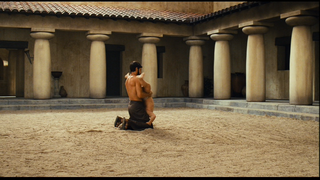
I don’t know if it’s just me, but over the past few years I’ve seen an uptick in movies and television shows about past eras and events.  From the movie “300” to the recently ended “Spartacus” series on Showtime, and even the new “Vikings” series on the History channel, people everywhere seem to be interested in making entertainment of the past.  As a man who spends a good deal of his time reading about history and studying history, it always interests me to watch these types of shows and movies from an historical accuracy perspective.


“300”, the story of 300 Spartans who stood against hundreds of thousands of Persians, eventually perishing while paving the way for an ultimate Greek victory against the Persian invaders is a favorite in my house.  When my son was 3 years old he came into the room one day and I was watching it, and ever since it’s been his favorite movie.  I think some of the values in the movie are great to teach him, and so I’ve always let him watch the movie as long as he didn’t just watch the fighting scenes (which is of course what he always wanted to watch).  Over the years we’ve watched the movie hundreds, maybe thousands of times, and over that same time period I’ve done some reading and studying of the Spartans and their way of life.  A good deal of the movie was historically accurate, and the principles behind the movie were also pretty much accurate, but a good deal of Hollywood went into it as well.  Let me separate the two for you: Sparta from Hollywood.


At the beginning of the movie, Leonidas is shown wrestling with and training his son (Pleistarchus).  This was actually the accurate part.  The inaccurate part was later, when Gorgo is shown speaking with the senator and indicating that she’d miss her son as it was “his time”.  What she was referring to was the agoge, a Spartan tradition introduced with the laws of Lycurgus.  As part of the agoge all Spartan boys were sent to a military style training camp from the age of 7 til the age of 18.  After leaving this camp they secured a place for themselves in their society.  All Spartan citizens except for kings that is.  Kings were believed to be direct descendants of Hercules himself, and as such did not need the same training as other Spartan citizens did.

The first thing that I find important to mention is the depiction of Leonidas as sole king of Sparta.  This is not true, Sparta governed themselves under a dual kingship, descendents of the same two families inherited the throne.  Those two family lines were believed to trace back to Heracles-or Hercules as you might know him-himself, and they were known as the Agiads and the Eurypontids.  Leonidas was of the Agiad dynasty-as was his wife Gorgo, it was common to marry within the same bloodlines to keep the bloodlines strong and inheritances within the family.  Since women in Sparta (as opposed to most of the Greek and rest of the world at that time) could inherit and own property, Gorgo was a prized bride.  At the time of the Battle of Thermopylaes (the “Hot Gates”) Leonidas’ co-king was Leotychidas.  Leotychidas was about 5 years older than Leonidas, and came into the throne a year prior to Leonidas.  He also lead the Spartan forces to victory over the Persians following the Battle of Thermopylae.  The Persian messengers would have spoken with both kings, not just Leonidas.

In the movie “300” Gorgo is shown telling Persian messengers that “Only Spartan women give birth to real men” and that was why she could speak amongst the men.  Historically, this quote IS attributed to Gorgo, the wife of Leonidas, but she did not say it to a Persian messenger, but rather a Greek woman who observed how Spartan women control their men.
The next major historical inaccuracy was the depiction of “the Ephors”.  In the movie “300” you’ll remember Leonidas climbing treacherous cliffs to speak to deformed religious advisors of some sort.  This is not at all what the actual Ephors were.  The Ephors were a 5 man council, elected annually.  Spartan citizens over the age of 65 were eligible for election, and after being elected once you could not be re-elected.  The Ephors actually really ran Sparta, turning the kings into figureheads, and more like generals than kings in the sense the title would mean anywhere else.  Actions the kings took DID need approval by the Ephors, and one or two of the Ephors would occasionally accompany a king to a particularly large or important battle.  They were not, however deformed religious mystics translating the word of the gods through drugged up teenage girls.  In fact, the maker of the movie may have been more close to depicting “Delphi” where the oracle resided.  The Spartans were famously pious-more so than almost any other civilization before or since-and were often set upon a path or deterred from it by the Oracle.  This was a well known fact by their friends and enemies alike, and more than once the Oracle was bribed to manipulate the Spartans onto a desired path.

Leonidas had a very fairly short reign, from about 490 BC to his death at Thermopylaes in about 480 BC.  His reign started under questionable circumstances, his older half-brother having died from “self-inflicted” knife wounds after having gone crazy and leaving Leonidas the heir to the throne.  The Spartans were coming off a very tumultuous time in their history, one that left Leotychidas’ predecessor an advisor to current Persian king Xerxes, and gave the two new Spartan kings a great deal to prove during their respective reigns.  Both kings ultimately delivered, with Leonidas perishing in true Spartan fashion, and Leotychidas leading the Spartan troops to victory over the Persians after that.
The last major difference in the movie and reality was the amount of soldiers sent to stand at Thermopylaes and face Xerxes and his forces.  The movie (and title) would have you believe just 300 Spartans stood strong, with the possible help of a few Greek potters and farmers.  This is not entirely true.  While there were only 300 Spartan warriors present-and they WERE the best, all with born sons, and all expecting to die-the other Greeks joining them numbered about 7,000.  This is the force that stood against Xerxes’ military might, until it was obvious they would all perish, when the foot path behind them was revealed by the traitor (that part was true).  At that point, 298 Spartans stood, and the other Greeks left.  It is believed that upon his death, the body of Leonidas was disfigured and mutilated by the Persians who hated him so much by the end of his stand.  2 Spartans were unable due to eye disease to stand with their brothers that day.  Both ultimately died however, one hanging himself due to shame and the other in a heroically suicidal death at Platea the following year.

Four famous lines have managed to survive the ages and found their way into the movie;
1) When the Persians told the Spartans to lay down their weapons, Leonidas is believed to have actually said “Come and get them.”
2) When the Greeks discovered they were about to be annihilated by the Persians, King Leonidas stood up and told his men “eat a hearty breakfast for tonight we dine in Hades”.  This would have been significant because Spartans typically did not eat breakfast, partaking in one meal (dinner) each day.
3) The Spartan Dieneces, one of the 300 DID in fact say “So much the better-we shall fight in the shade” when told the Persian armies were so great that their arrows would blot out the sun.  Spartans viewed arrows as the weapon of the weak, the womanly even.  They felt that a real man used a sword and spear to battle his opponents close up, and that only a coward would stand a distance off and rain down arrows.
4) The final line comes from before the battle, when Gorgo tells Leonidas “Come home with your shield-or on it”.  This is something of a famous Spartan wife line.  Spartan wives were well known for their resiliency and ability to deal with the loss of a husband or son.  Sparta was a very community driven society, and wives or mothers as well as the men were expected to act that way.  In reply to Gorgo’s request as to what she should do while he was gone he replied “Marry a good man, and bear good children.”  In an even more shocking example of this attitude, another Spartan woman Argileonis was being visited by citizens of Amphipolis after the death of her son Brasidas.  When the visitors told her what a great man her son had been, she replied “My friends, it is true that my child was a fine and good man, but Sparta has many men better than he.”

The final contradiction that strikes me about the movie “300” was the idea that the Spartans fought “for freedom”.  They did technically-their own freedom.  For few societies throughout the history of the world-if any-have been more dependent upon slaves and slave labor than the Spartans were.  The Spartans were truly dedicated to war.  You may remember a point in the movie when Leonidas asks the Greek soldiers what their profession was, and then asks his men what their profession is.  His men were all soldiers, they trained all day, fighting and killing was the only thing they did.  Spartan society revolved around “Helots” captured slaves from local areas, enslaved by the Spartans to run their lives for them. Helots were almost the equivalent of butlers, nannies, landscapers, gardeners, laborers.  Upon their backs the society of Sparta ran.  

Between the Spartans and Helots was another race known as “Perioeci”.  They were essentially the tradesmen and artisans of the society.  They were not slaves, but they weren’t Spartan citizens either, and weren’t afforded the rights Spartans were.  Spartans were perhaps the most vicious and heartless masters as well.  Their most elite soldiers formed a police force whose sole job was to terrorize Helots.  Spartans lived in constant fear of rebellion (and often faced it) and so this police force would routinely murder, assault, or maim Helots they viewed as a problem.  In fact, each year when the Ephors took office they made two proclamations, one of which was to declare open war on the Helots just in case any Spartan citizen felt like killing one throughout the course of a normal day.  Interesting to think that these were the men who “stood for freedom”.

Wednesday, June 10, 2015

This Day in History...Alexander the Great

From time to time I'll do a "This Day in History" feature.  In it I'll tell you about an important historical event, or person and an important event in their lives.  Today, that person is Alexander the Great, who died on either June 10th or June 11th, in the year 323 BCE.  (This site views history from a purely historical angle, not a religious one, so we'll use "BCE" in place of "BC" or "Before the Common Era" and "CE" in place of "AD" for "Common Era".)

Alexander III of Macedon was born probably around July 20, 356 BCE.  Born the son of King Phillip of Macedon, it was only the best for Alexander from birth through adolescence, including tutoring from the great Aristotle himself.  At the young age of 16 however, his youth and education came to an abrupt end, and he was left in charge as "regent" while his father waged war abroad.  It wasn't long before Alexander was forced to prove his leadership qualifications as he was quickly thrust into the proverbial fire.

While his father was gone, the Thracian Maedi revolted, and Alexander beat them back, building a city named after him in the process.  Upon his father's return he was dispatched again to deal with uprisings in Thrace, and after success there the two of them paired up to wage a campaign that tore through Greece, restructuring the balance of power in that area of the world, transitioning it from the Spartans and the "Peloponnese alliance" to the Macedonians, and their newfound "Hellenic Alliance" or "League of Corinth" which essentially included all of Greece except the Spartans, who may have been having a bit of a hard time coming to terms with their new place in the world.

Alexander's ascension to the throne should have been a sign of things to come.  He brutally and systematically had almost every relative regardless of how distant or powerful-from his father the king to clear the throne itself to distant cousins who might have some claim to power-executed, beginning with his father.  His father's death was at the hands of Pausanias, the head of his bodyguard and was motivated either by Olympia-Alexander's mother-or Alexander himself.  Both were concerned over Phillip's recent marriage to Cleopatra Euricydes.  If he were to have a child with her, that child might have a stronger claim to the throne than Alexander, as he would be fully Macedonian and Alexander was not.  Their concern clearly motivated their quick and decisive actions, taking the throne in a whirlwind of murder and deceit.

The news of his father's death prompted revolts throughout the current kingdom, which Alexander chose to deal with militarily.  After quelling these uprisings, he turned his attention to the Persian front, intent on conquering it all and even announcing it as a gift to him from the gods at one point.  He prepared himself by securing his own borders, putting down any rebellions and putting together a force of at least 48,000 soldiers to launch a campaign of attacks against Persia.

Over the course of the next two years Alexander waged a merciless war against the Persian empire, conquering all in his path.  He also underwent something of an evolution as a leader and conqueror; he started as a man with a reputation for being a kind conqueror and one who showed his enemy respect.  Before the end of the second year of campaigning however, Alexander had learned the power a victory held, and began making significant demands in negotiations for surrender.  These demands struck fear into the leaders of some, motivating them to cede power to Alexander without a battle.  By now, Alexander had taken to massacring all men of military age, and selling all women and children into slavery after conquering a nation, and as he marched through Persia, then on to Egypt he showed no mercy, building his empire and completely annihilating his opponents in the process.

Alexander spent years waging war, and whether it was the toll of injuries over those years, disease, or assasination by poison, at the age of 32 years old and after about 2 weeks of sickness, Alexander died in the palace of Nebuchadnezzar, in Babylon.  After death his body was being transported to Macedon when it was stolen and brought to Memphis instead.  It was displayed there for several hundred years before being closed to the public in about 200 CE.  It is no longer known exactly where his tomb is.